
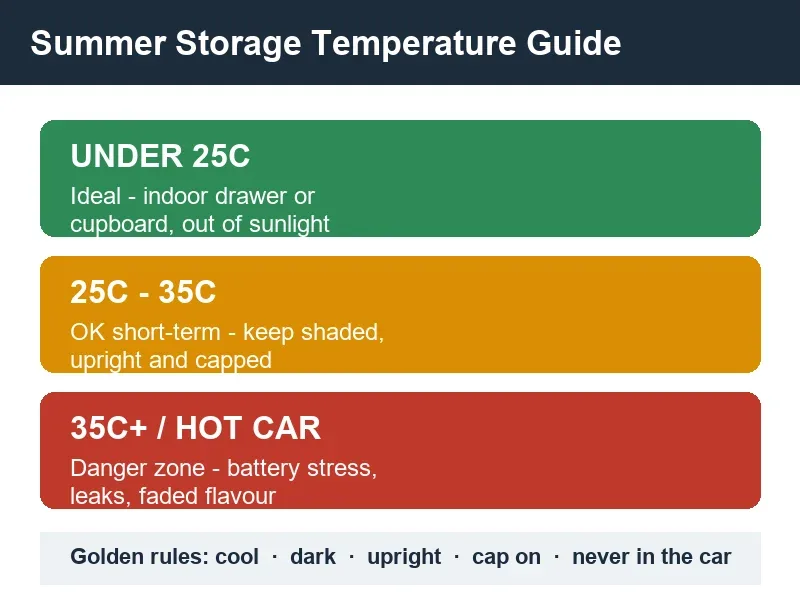
If you are wondering how to store disposable vapes in Australian heat, the short answer is this: keep your device upright, out of direct sunlight, and somewhere that stays below about 25°C — a cupboard or drawer inside an air-conditioned room is ideal. A parked car, a windowsill or a beach bag in the sun is the fastest way to ruin a perfectly good vape, because lithium batteries and flavoured e-liquid both degrade quickly once temperatures climb past 35°C. Australia's summer is brutal on small electronics, and a few simple storage habits can easily add weeks of life to a device like the IGET One 12000 puffs. This guide covers what heat does to a disposable vape, where to keep it, and the mistakes to avoid.
Note: vaping products sold on this site are strictly for adults aged 18 and over. Disposable vape rules vary by state and territory in Australia, so always check your local regulations before buying or carrying a device.
What Australian Heat Actually Does to a Disposable Vape
A disposable vape looks like a sealed unit, but it is really three sensitive components packed together: a lithium-ion cell, a plastic tank of flavoured e-liquid, and a mesh coil. Each one reacts badly to sustained heat.
The battery. Lithium-ion cells are happiest between roughly 15°C and 25°C. In a hot car on a January afternoon, cabin temperatures can pass 60°C, and a dashboard in direct sun can climb higher still. Sustained heat accelerates chemical aging of the cell, so a 2700 mAh battery simply will not hold charge the same way after repeated heat exposure. Extreme heat can also cause the battery to vent, which is why every reputable manufacturer warns against leaving devices in vehicles.
The e-liquid. E-liquid is a blend of propylene glycol (PG), vegetable glycerine (VG) and flavourings. As temperatures rise, the mixture thins out. Thinner e-liquid flows through the coil faster, which can flood it, cause gurgling, or lead to leaks through the airflow holes — a common reason people find sticky spots at the bottom of their bag. Heat also steadily degrades flavour molecules, so a device that sat in the sun for a fortnight will taste noticeably flatter than one kept cool.
The coil and wick. When e-liquid thins and the device sits unused in the heat, the wick can dry out unevenly. Fire it up after that and you get that harsh, scorched hit everyone dreads. If that has already happened to your device, our guide on why a disposable vape tastes burnt explains the causes and what, if anything, can be salvaged.
Where to Store a Disposable Vape in an Australian Summer
Safe storage costs nothing. Follow these five rules and your device will cope with summer.
1. Keep it below about 25°C. Inside a house, that usually means a drawer or cupboard in the coolest room — not the kitchen bench next to the oven, and not a shed or garage that turns into an oven by mid-afternoon. If you have air conditioning, the device is fine sitting in an open room.
2. Keep it out of direct sunlight. Even at a mild ambient temperature, sun through a window can push a dark-coloured device well past 40°C. A bedside drawer beats a windowsill every time.
3. Store it upright. Standing the device on its base keeps the e-liquid settled away from the airflow channels and the mouthpiece. This matters more in summer, because warm, thin e-liquid finds its way into places it should not go far more easily.
4. Leave the silicone mouthpiece cover on. That little cap is not just hygiene: it keeps dust out of the mouthpiece and slows evaporation.
5. Keep it away from metal and clutter in your pocket or bag. Loose coins, keys and headphones cables can press against the device or scratch the casing. A small pouch or the original box is the cleanest solution, especially for a larger device like the IGET Bar Pro 10000 puffs.
Cars, Beaches and Festivals: The High-Risk Moments
Most heat damage in Australia happens in a handful of predictable situations, and they all involve leaving a device somewhere it cannot escape the heat.
Parked cars are the number one offender. On a 35°C day, the cabin of a parked car can reach 55–65°C within half an hour, and a device left on the dashboard sits in full sun on top of that. Never leave a vape in the car — not for ten minutes, not in the glovebox, not "just while I run in". The glovebox is actually one of the worst spots because it is enclosed and insulated, so it holds heat longer.
Beach bags and eskies are sneakier. A bag left on hot sand or a towel in full sun turns into a small oven. If you take a device to the beach, keep it in a shaded zip pocket, stand it upright, and ideally wrap it in something that insulates rather than absorbs heat.
Festivals and outdoor events combine heat with chaos. Devices get sat on, dropped into sun-soaked pockets, and shoved into bags screen-first. If you are heading out all day, a compact device such as the SP2 12000 puffs is easier to keep shaded than a chunky box-style unit.
Should You Put a Vape in the Fridge or Freezer?
This question comes up every summer, and the answer is no — the freezer especially. While it is true that cool temperatures slow e-liquid degradation, a fridge introduces two new problems. First, condensation: moving a cold device into humid Australian air (or pulling it out of the fridge into a hot room) causes moisture to form on and inside the device, which is far worse for the electronics than warmth alone. Second, extreme cold thickens e-liquid, which floods the wick when it warms again and can cause leaking.
A device stored in a room at a steady 20–25°C loses very little over the weeks you will realistically take to finish it. If you have a bulk stash you are keeping for months, a cool interior cupboard away from appliances is a far better option than refrigeration.
Common Storage Mistakes That Shorten Device Life
Beyond the obvious "don't cook it" advice, these are the habits we see shorten device life most often:
- Storing it half-charged in a hot spot. Heat plus a full lithium cell is the harshest combination. If a device will sit unused for a while, keep it cool and treat it gently — a rechargeable model like the IGET One is happiest when it is not parked at 100% in a warm drawer for weeks.
- Leaving it screen-up on the dash of a work ute. Tradies, this one is for you: the dashboard mount that suits your phone is no place for a vape. Use the centre console.
- Standing it on its mouthpiece. Inverted storage in warm weather puts a puddle of thin e-liquid right against the intake — a guaranteed gurgle or leak.
- Ignoring the signs after a heat event. If a device has been through a hot car and now tastes off, hits weak, or rattles when shaken, the damage is usually done. Our checklist on when to replace a disposable vape covers the six signs that a device is finished.
- Assuming all devices cope equally. They do not. Build quality, battery size and wick design all affect how well a device tolerates heat.
Choosing a Device That Handles Summer Better
Storage habits matter most, but the device you buy also plays a role. Larger lithium cells with proper protection circuits cope with temperature swings better than small no-name cells, and a clear display takes the guesswork out of whether a device is still healthy after a hot week.
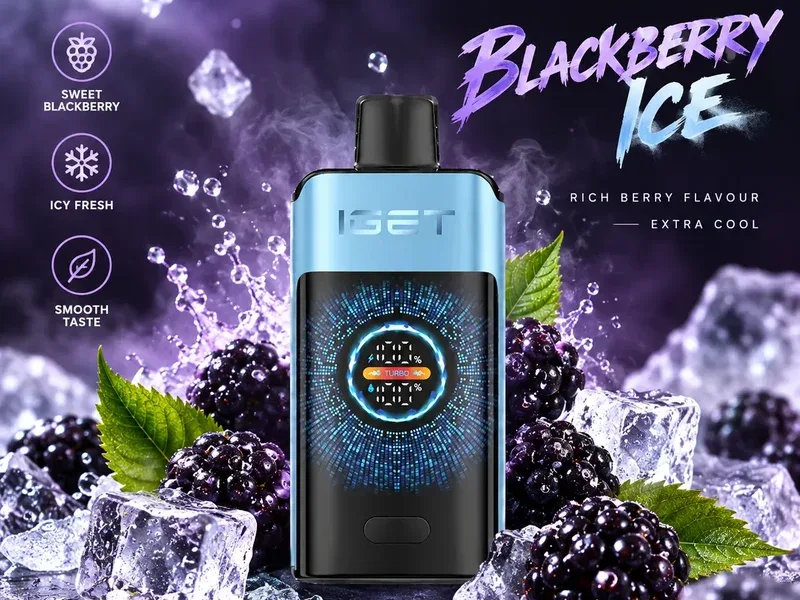
The IGET One 12000 puffs is a good benchmark. It pairs a 2700 mAh rechargeable battery with a 0.6Ω dual mesh coil and a front display showing both battery and e-liquid percentages, so you can see immediately if a heat event has cost you capacity. It is priced at A$56.90 and offers regular and turbo modes, with turbo trading puff count for intensity — roughly 9,000 puffs in turbo versus up to 12,000 in regular mode.
If you prefer something more compact, the IGET Bar Pro 10000 puffs runs a 2000 mAh rechargeable cell with a 1.2Ω mesh coil at A$49.90, while the SP2 12000 puffs is the budget pick at A$39.90 with a front percentage display of its own. Whatever you choose, the storage rules in this guide apply identically: cool, dark, upright, and never left in the car.
FAQ: Storing Disposable Vapes in Australian Heat
Can I leave my disposable vape in the car overnight?
No. Overnight temperatures rarely fix the problem — a car parked outside stays warm well past midnight on summer nights, and the morning sun reheats it quickly. Repeated heat cycling is what ages the battery fastest. Bring the device inside with you.
Does hot weather make a vape run out faster?
Indirectly, yes. Heat thins e-liquid, which can increase leakage and evaporation, and a heat-stressed battery delivers less consistent power, so you may notice weaker hits and a shorter usable life even if the puff count has not literally been consumed.
How do I know if heat has damaged my vape?
The usual signs are a noticeable drop in flavour intensity, leaking around the base or airflow, a rubbery or scorched taste, and — on devices with a display — battery readings that fall faster than they should. One hot afternoon usually will not kill a device, but two or three will start to show.
Is it safe to charge a vape in hot weather?
Charge it indoors at room temperature, on a hard surface, and never while the device itself is hot to the touch. Charging adds heat on top of whatever the environment has already applied, so let a sun-warmed device cool down first, and always use a quality USB-C source rather than a fast-charge laptop port left in the sun. Rechargeable devices like the IGET One 12000 puffs make this easy with a standard USB-C port.
The Bottom Line
Storing a disposable vape in Australian heat comes down to three words: cool, dark, upright. Keep the device below about 25°C and out of the sun, stand it upright, leave the mouthpiece cap on, and never leave it in a parked car, on the beach towel, or anywhere else the summer can cook it. Do that, and a quality device will hold its flavour and battery performance to the last puff.
Ready for a summer-proof device? Browse the full IGET One 12000 puffs range at igetaushop.com and pick a flavour that will still taste right in February.